
When AI Does the Shopping: What's Happening in the US
In the United States, AI assistants are starting to buy on our behalf. What has changed, why it matters and how to get ready.
An assistant isn't won over by a beautiful photo. It reads the data.
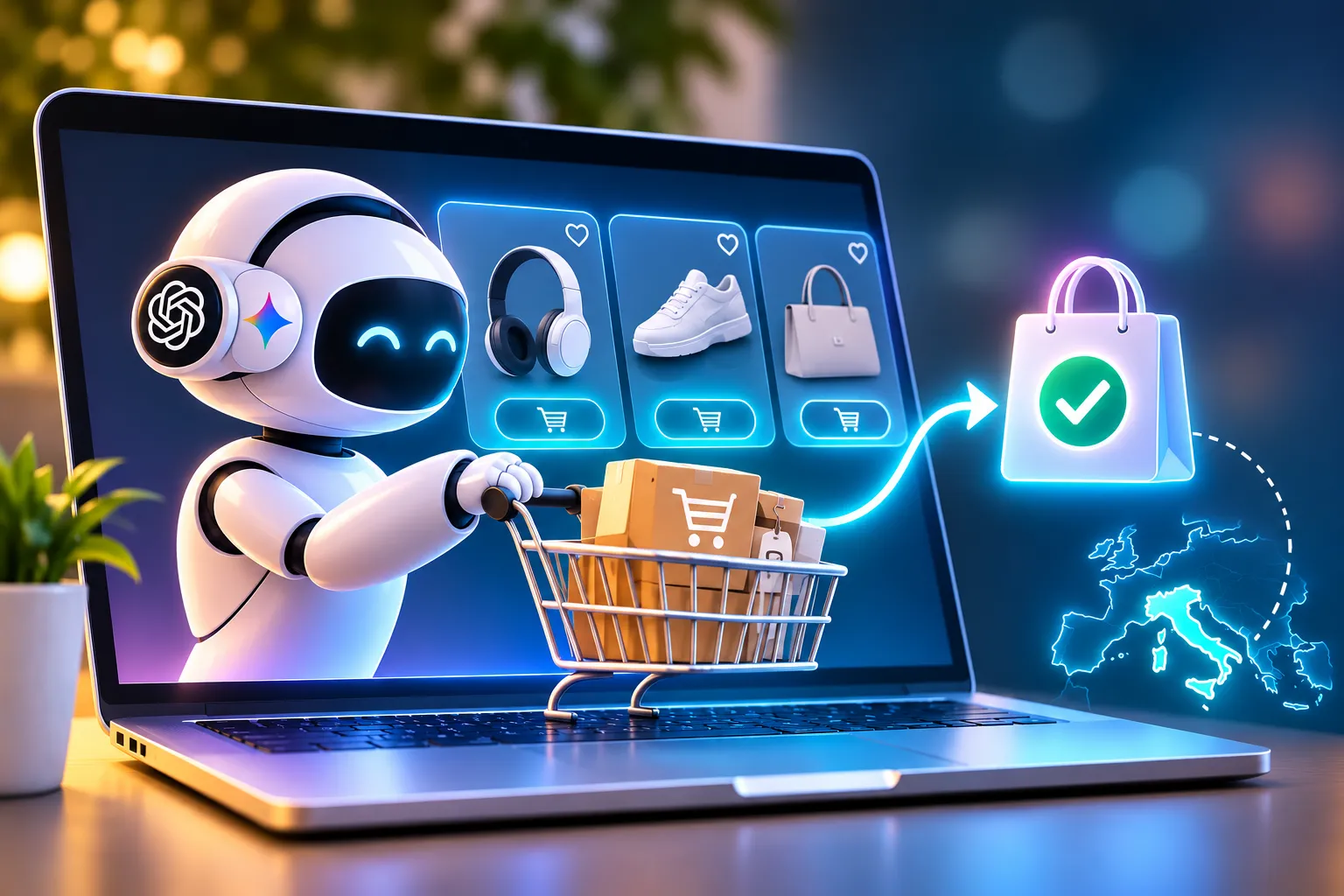
Until recently, we asked an assistant like ChatGPT or Gemini to recommend a product. In the United States, the assistant can now buy it for us too. In the last week of October, the biggest names in online retail took major steps in this direction. Here is what changed, and why it matters for brands well beyond the US.
What happened
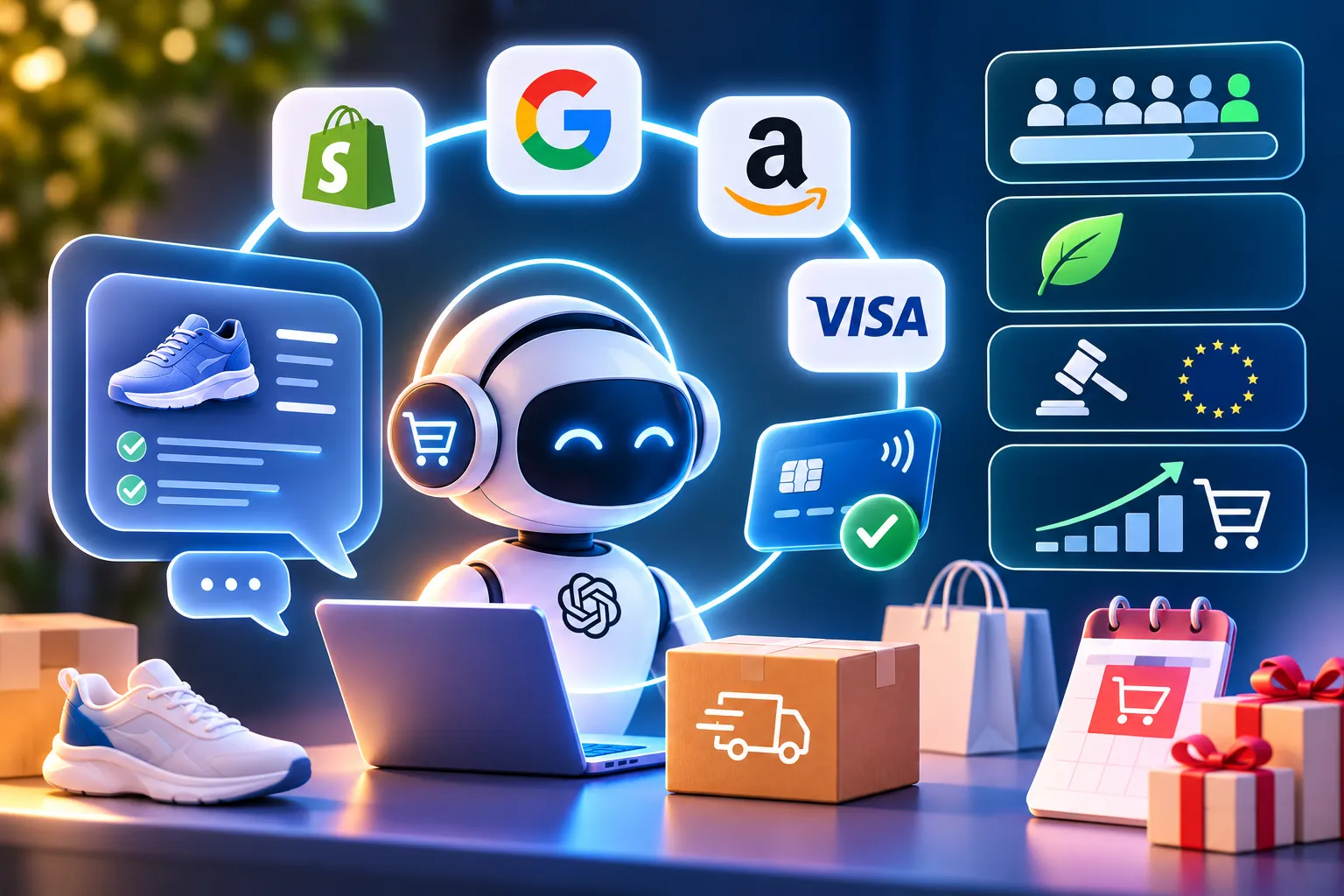
Four announcements landed within a few days, all pointing the same way:
- Shopify, one of the world’s most widely used platforms for building online stores, introduced new tools that let AI assistants search for products, fill a cart and pay, always with the customer’s permission.
- Google said hundreds of thousands of brands, Nike among them, can already be bought directly through its AI services. It also announced it will bring ads into the answers of its AI-powered search, worldwide.
- Amazon upgraded its assistant, which now handles more than 100 tasks, from shopping lists to returns.
- Visa said nearly 50 partner companies are already processing payments started by an AI assistant.
Shoppers, however, are cautious. A survey of more than 5,000 consumers found that 8 in 10 have used AI to research a purchase. But only 1 in 10 has actually bought something through AI, and just 7 in 100 would let an assistant buy without giving final approval.
How it works, in plain terms
Imagine telling your assistant: “Find me a pair of running shoes, size 9, under $120, delivered by Friday.” The assistant compares stores, picks the best offer and, if you approve, pays. You never visit a website.
For this to work, stores have to “speak the assistants’ language”. In other words, they need to describe products, prices, availability and return terms in a format a machine can read without mistakes. That is why Google, Shopify, OpenAI and others are setting shared standards.
Today this works almost only in the United States. It is not yet available in Europe, but it is likely to arrive.
Why it matters, even outside retail
For the economy. The starting point of a purchase is shifting: no longer the search engine or the store’s website, but a conversation with an assistant. Whoever controls that conversation decides which products to show. It is no coincidence that Amazon, for now, blocks other companies’ assistants. Walmart, the largest US supermarket chain, accepts them instead, with clear rules: they must identify themselves and respect the spending limits set by the customer.
For businesses. A store with incomplete product descriptions risks becoming invisible. An assistant isn’t won over by a beautiful photo: it reads the data. If size, material or delivery times are missing, it moves on to a competitor.
For the environment. It is too early for hard numbers. But if assistants help people choose the right size and product the first time, returns could drop, and with them unnecessary shipments. On the other hand, artificial intelligence uses a lot of energy. It is a balance worth watching.
What brands can do now
For brands that sell internationally, or plan to, it pays to get ready now, while this is still in its early days:
- Complete, clear product information: sizes, materials, origin, shipping times, return terms.
- An up-to-date store, built on platforms that are already adapting.
- Know where customers come from: measure how many visits and sales start from AI assistants.
- Follow European rules: the EU AI Act already requires businesses to tell customers clearly when they are talking to an AI system.
And for us as shoppers?
Handing routine purchases to an assistant, such as groceries or comparing deals, can save time. A few common-sense rules still apply:
- set a spending limit and always approve larger purchases;
- never give your banking passwords to an AI assistant, as Bank of America urged its customers at the end of October;
- remember that the “best price” an assistant finds is the best among the offers it could see, not necessarily the best anywhere. Member-only discounts, for example, are often invisible to it.
What to watch in the coming weeks
The first real test will be holiday shopping, starting with Black Friday. In the United States, Adobe expects visits to online stores coming from AI tools to grow 130% year over year between November and December. It will be interesting to see how many turn into purchases, and when these services reach Europe.
How AMT can help
AMT helps brands build online stores ready for international markets and for the way people will shop tomorrow, including through artificial intelligence. Want to find out how ready your ecommerce is? Let’s talk.